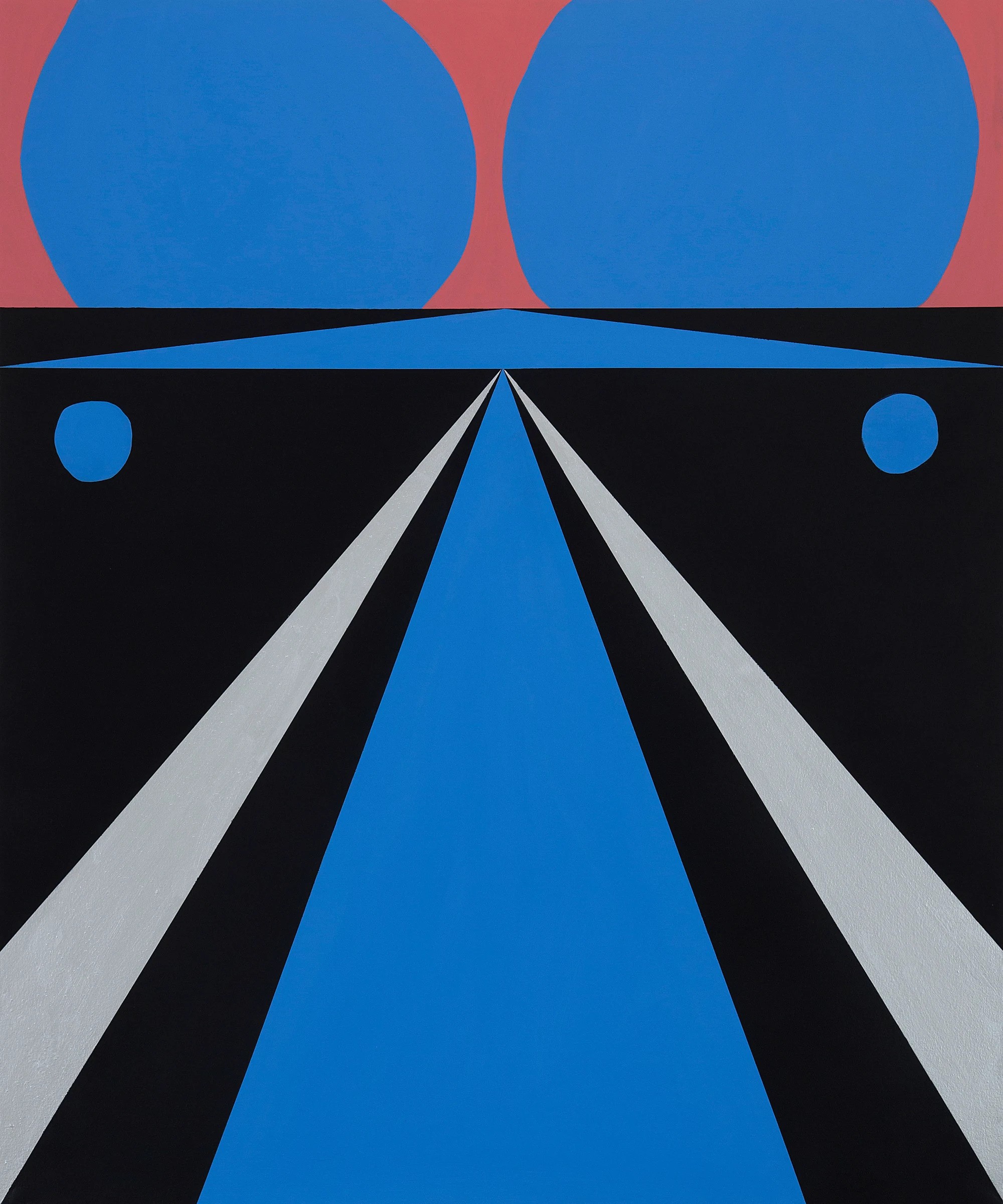
As pedantic bigotry surges globally and chauvinist grammar polices us into binaries—us versus them, native versus foreign—what can a Moroccan truck, lavishly ornamented and endlessly orbiting between cities, teach us about subversiveness, motion, and the permeability of identity in a society obsessed with defining, classifying, and containing?
We sat down with Nassim Azarzar, whose own orbit swings from Parisian suburbs to Tangier’s coastline, to discuss hybridity, the Third Space, and how an artist engages with vernacular culture without “eating the Other.” A conversation on agency, relational aesthetics, and the politics of motion — equally relevant to today’s obsessed classifiers as to the decorated trucks that first drew his gaze.
Maria Yigouti: Having grown up straddling two shores of the Mediterranean, how might an artist inhabit this in-between space without pandering to the voyeuristic thrills of the migrant story or resorting to cavalier uses of ethnic, telegenic narratives, while still asserting their own agency — its inedibility, so to speak?
Nassim Azarzar: This in-between space never appealed to me. Growing up in France, I faced a climate hostile to immigrant backgrounds — a constant push for “integration,” as if we had to prove our viability. Integration imposed a fracture: “us,” the racialized, versus “them,” the authentic. For years, I tried to hide this in-betweenness. To integrate often meant erasing the foreign part of myself, the part that defines me. It’s a subtle, insidious violence: the idea that the “other shore” within must be tamed.
When I moved to Morocco, I hadn’t yet realized how deeply that logic had conditioned me. My parents often spoke of “returning,” but once I settled here, people reminded me I wasn’t actually born in Morocco. That’s when the in-between truly hit me. Before that, all I wanted was to blend in, speak perfect French, and disappear into the collective.
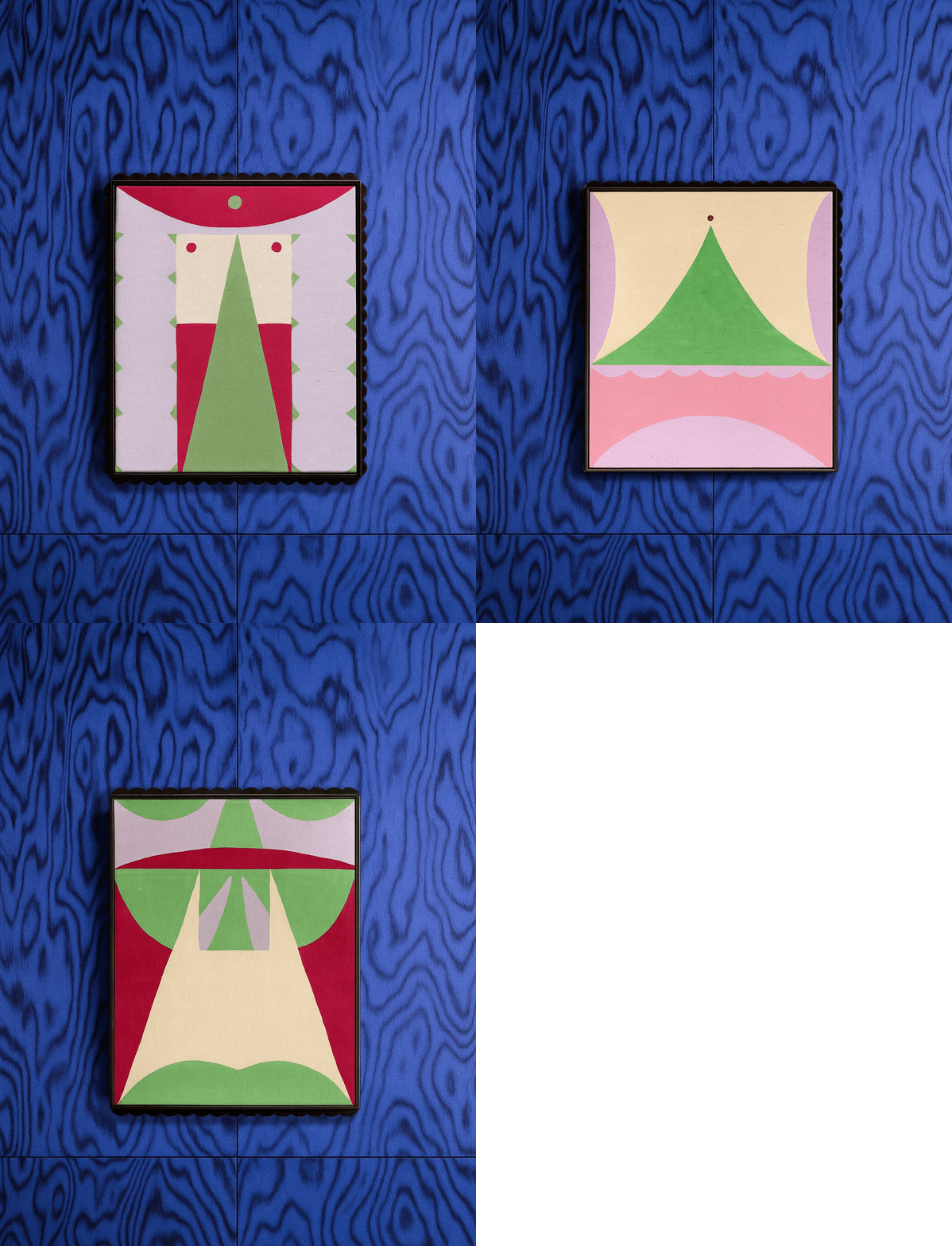
I never intended to make work about identity or migration — it found me. Living by the sea and feeling somewhat adrift, I focused on my immediate surroundings: the coastline’s mineral forms, elemental structures I felt as cosmic architectures. Gradually, my attention turned to vernacular street forms, until I encountered what would become central to my practice: the Moroccan transport truck. Painting them led me to question what it truly means to “paint from here.” Their constant motion mirrored my own. And as far-right movements rose globally, reading Louisa Yousfi’s Rester Barbares underscored the necessity of reaffirming my political stance.
Abstraction had long been my language, but I began questioning its privilege — who gets to speak outside identity discourse? I felt compelled to let my own story enter the work. Not to illustrate, but to make form and context inseparable. I wanted to turn hybridity from burden into banner. After years of endured humiliation, it felt like a revanche — or rather, a celebration.
With that context laid out — admittedly, a common one — I return to your question, which, for me, rests on one word: honesty. Today, it’s easier than ever to see the structures configuring our narratives — especially online, where everyone is their own storyteller under constant scrutiny. Flaubert wrote, “One must paint the mediocre well.” I encountered this line in Bourdieu, and it stayed with me. It captures the challenge of making reality felt in its banality, of rendering the ordinary extraordinary.
I believe we must free ourselves from the need to be understood or validated. Many artistic practices arise from the urge to explain or repair, but that still ties us to the frameworks that once confined us.