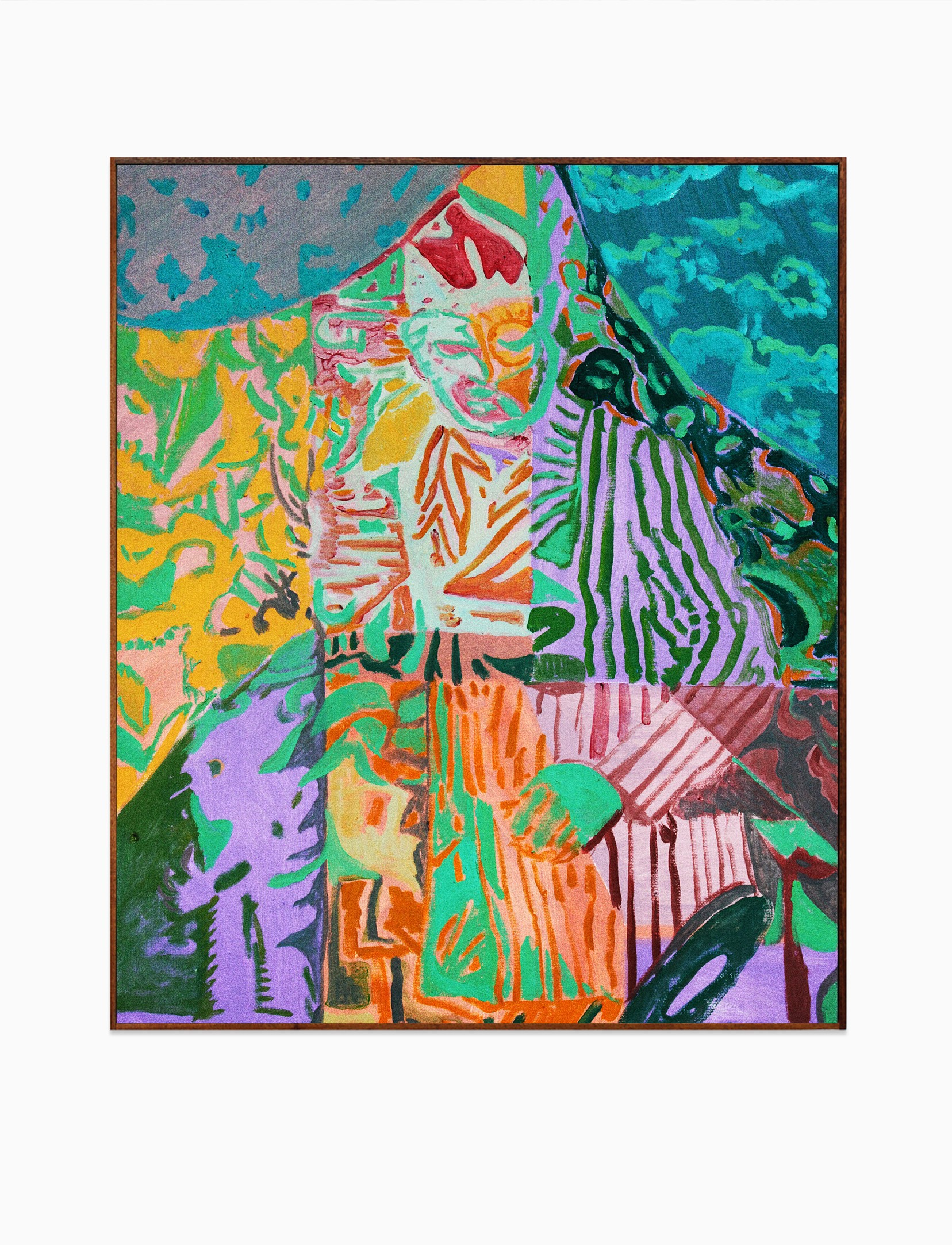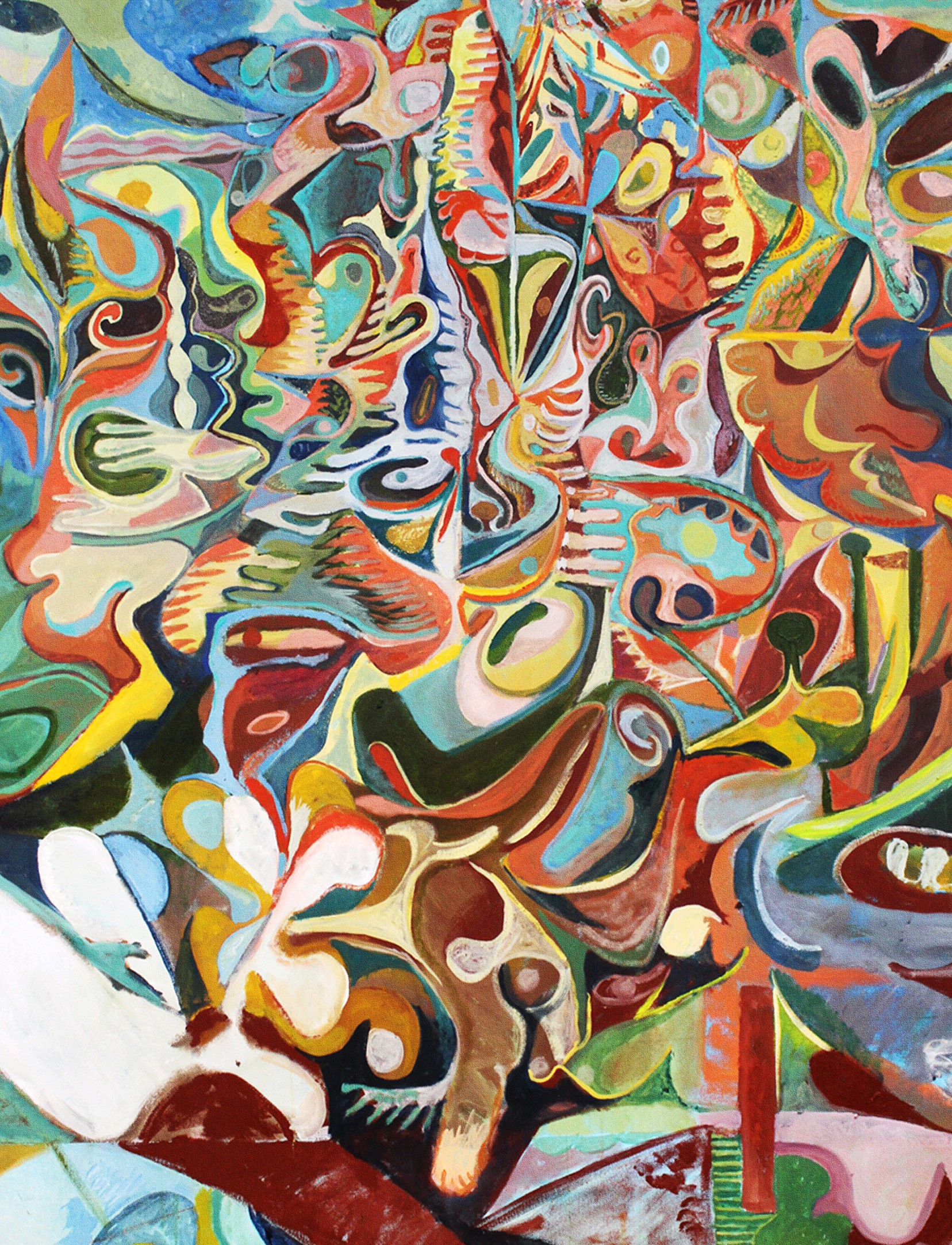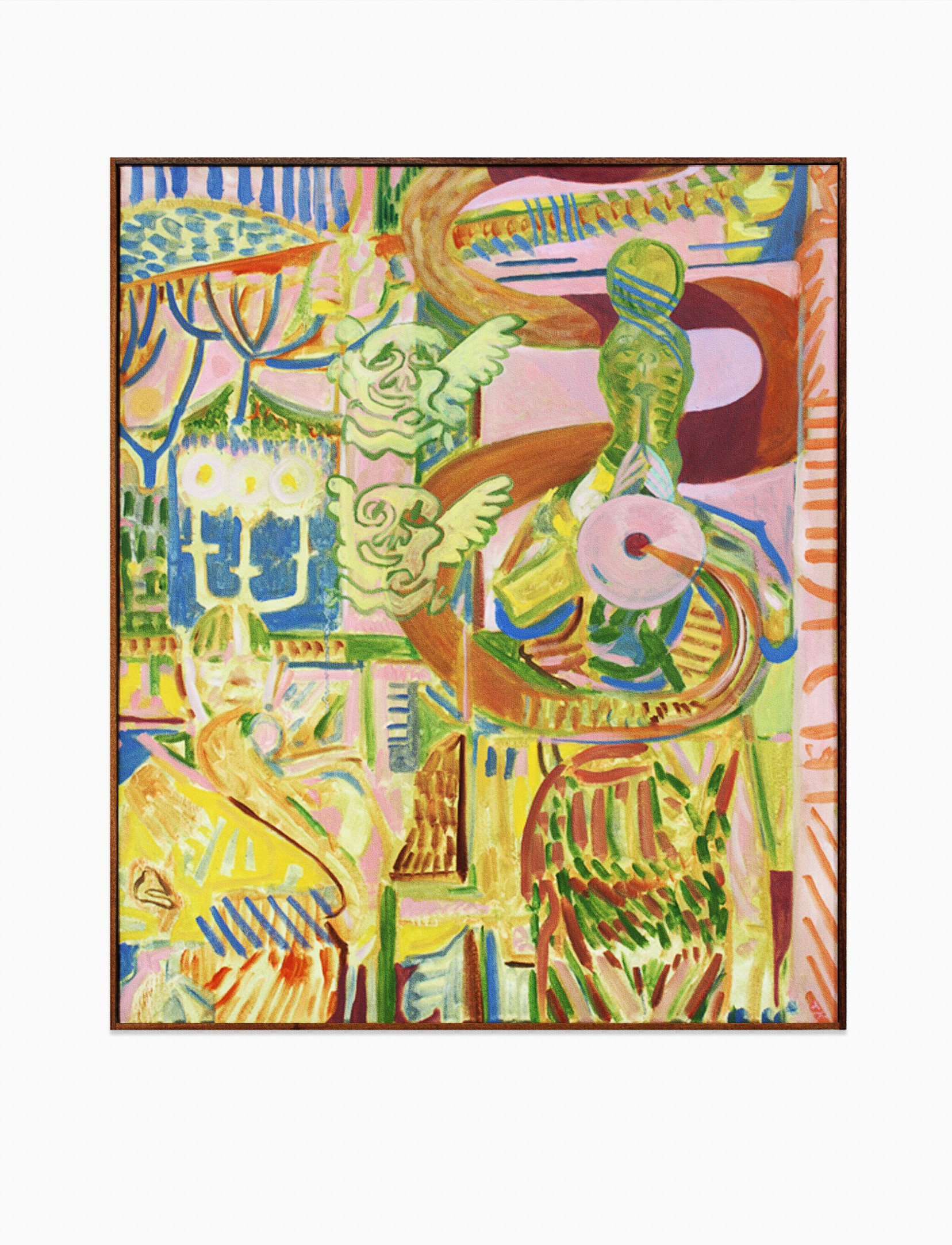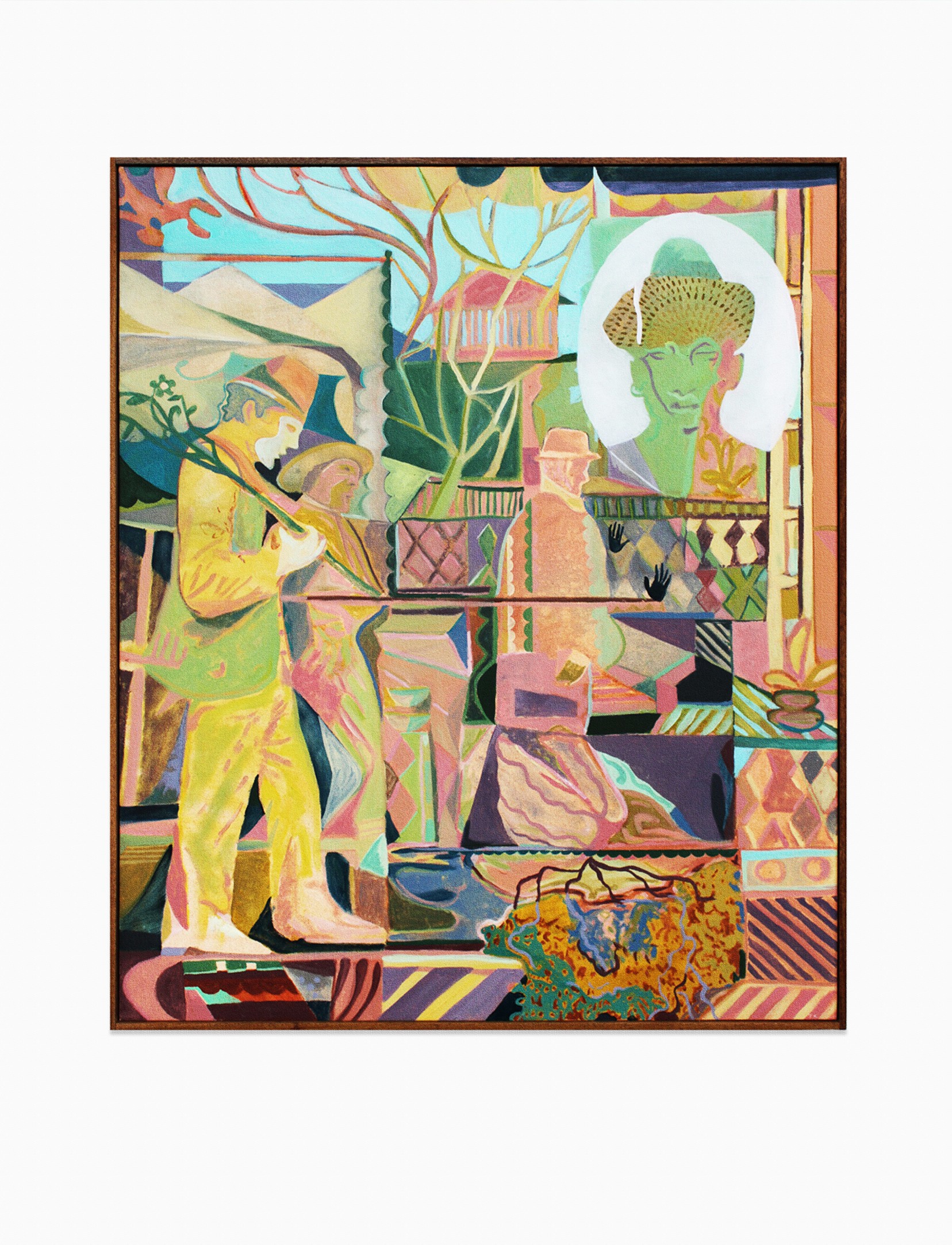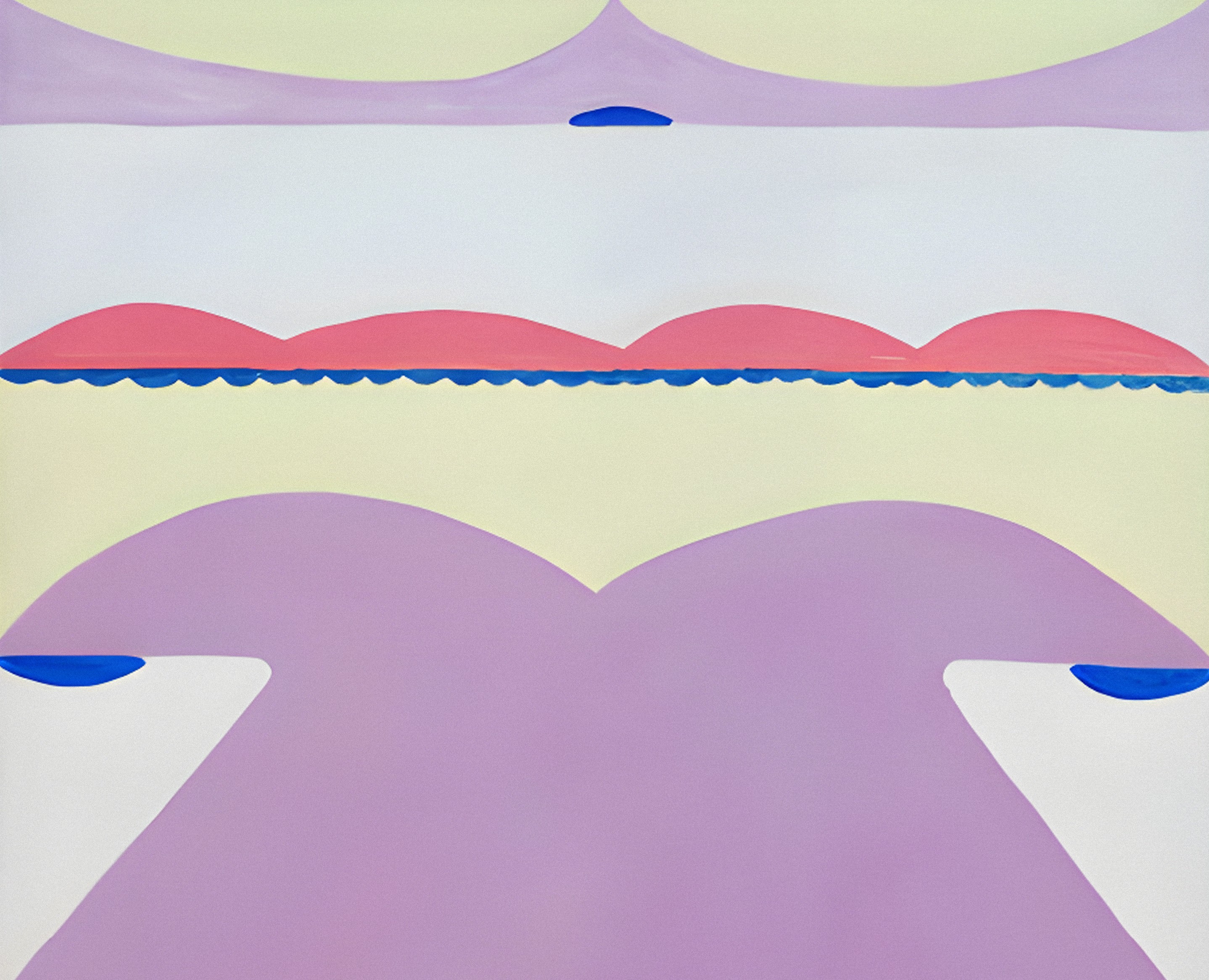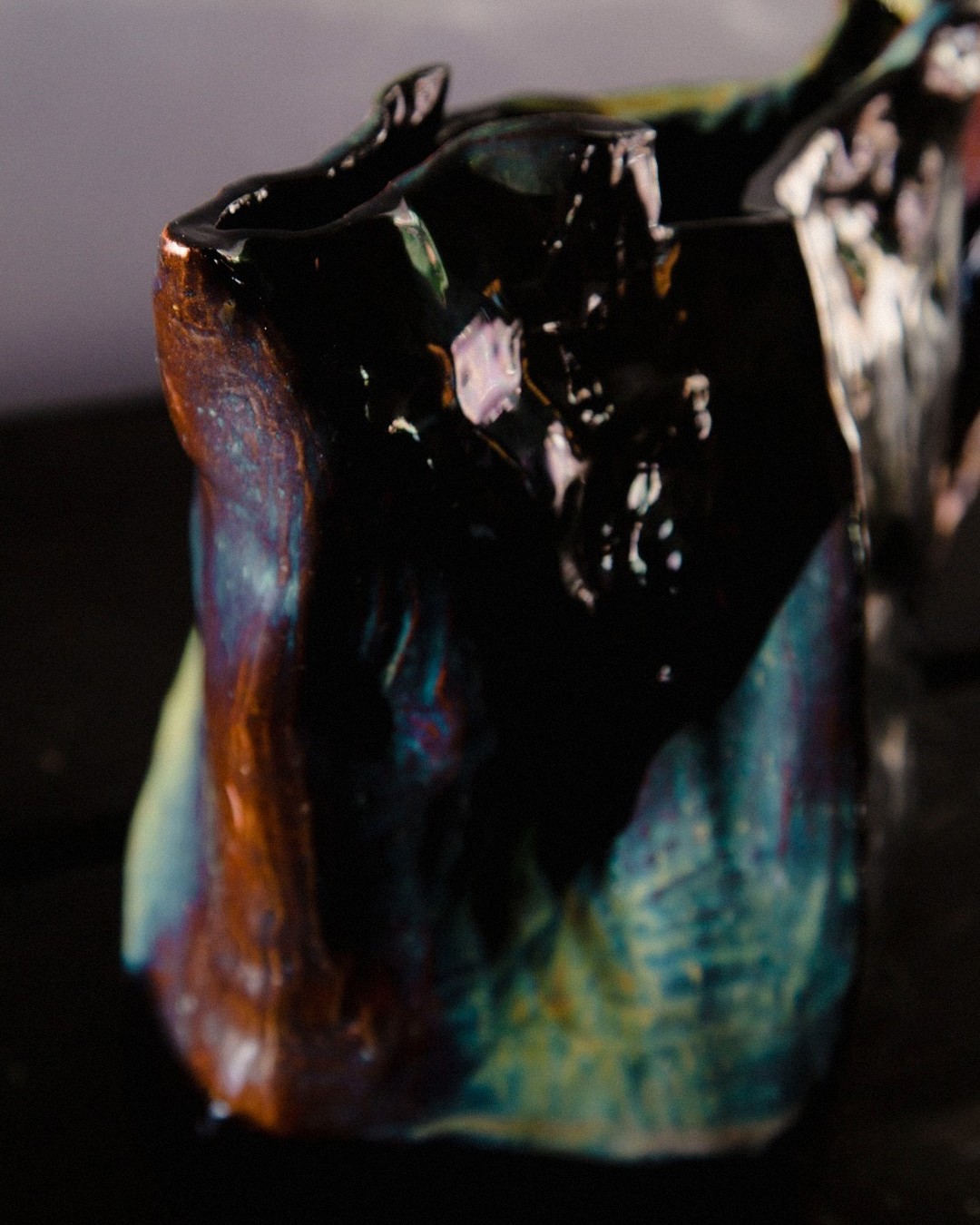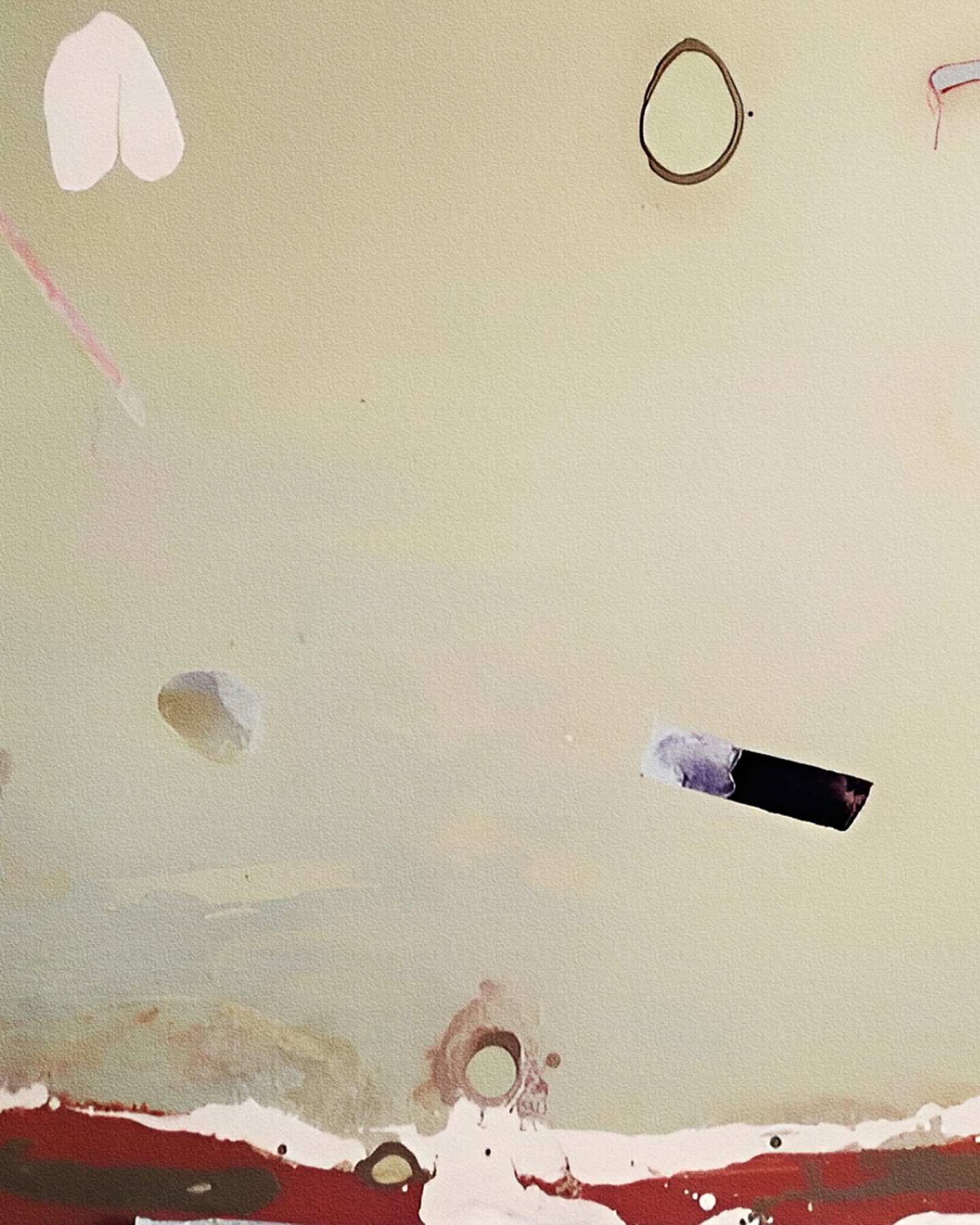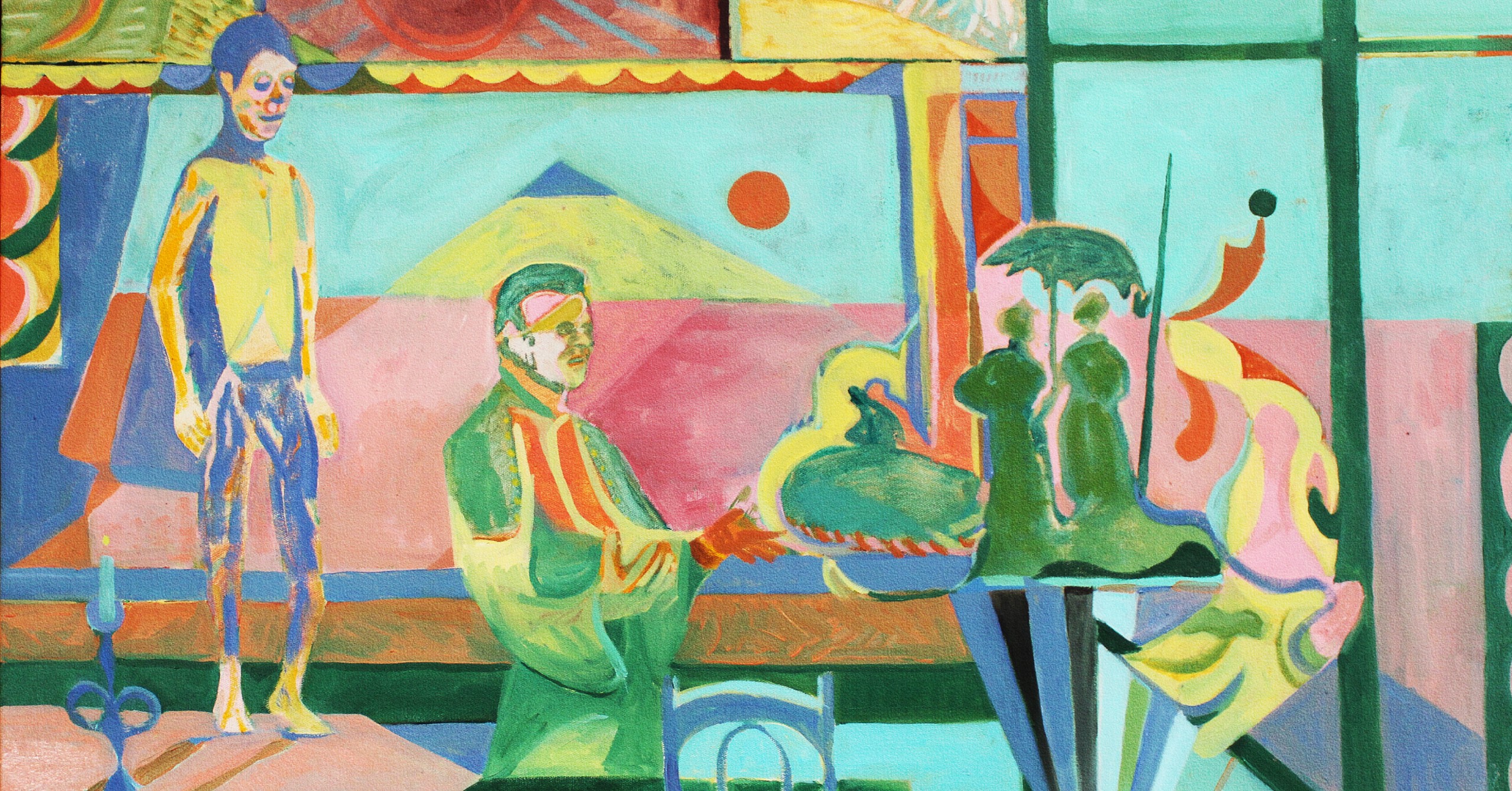
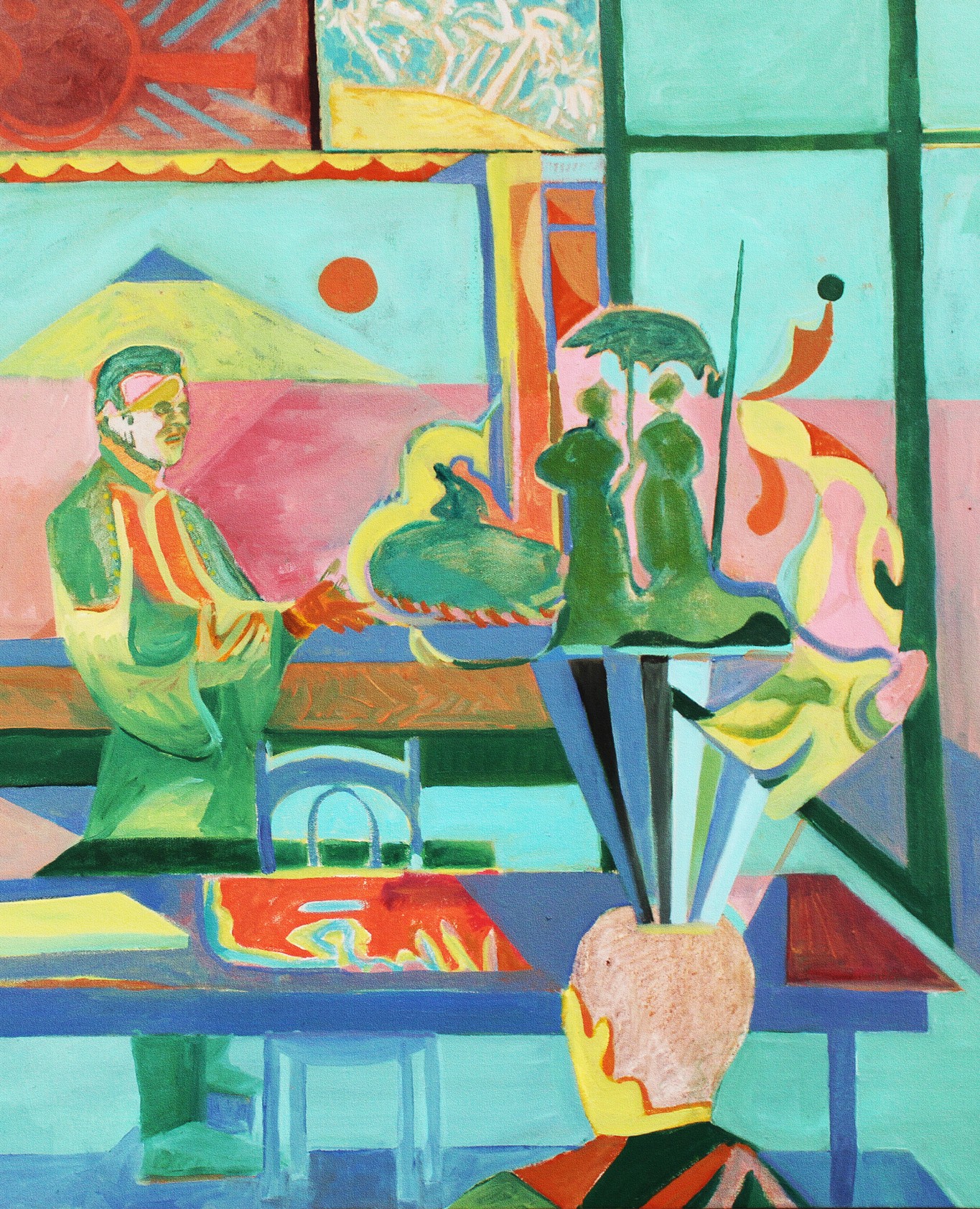
High above the Los Angeles basin, where the San Gabriel Mountains taper into chaparral and switchbacks, Tynan Kerr logs ten- to twenty-mile loops alone. These trails are not recreational but inductive: deliberate encounters with “altered or heightened states” that condition attention to both internal and external weather. "When I am spending more time hiking or plein-air painting, I feel in better relation with my dreams and subconscious." Arroyos and studio exist in a reciprocal pull. Ideas are ferried back from the range; at times, he reverses the circuit, kit in tow, "covering less ground but taking time to sit with paints." Solo treks and psychic drift are less distinct than they first appear.
Altered states of consciousness, psychedelic and spiritual, can, as Kerr puts it, "send currents flowing through archetypal structures — be totally illuminating or totally confounding, moving through our histories and memories, and opening experiences and visions that seem to take place outside of linear time." Time is neither frozen nor sequential; it loops and stalls. The logic is Jungian: archetypes don't persist in form; they irrupt through it. Kerr's paintings operate as constellating objects, the unus mundus finding its aperture.
The precedent is older than analysis. Hilma af Klint, whose systematic séance practice predates and arguably outpaces the Surrealist claim on automatism, gives a way to speak about hypnagogic modes without drifting into pneumatic kitsch or academic deadness, opening onto domains so often erroneously assumed to be closed. "There are overlapping interests in spiritism and spiritualism, mediumistic trance, and ritual frameworks placed around the process. A tuning: to receive, to listen in." Painting, for Kerr, is a form of channelling; what it requires is not discipline in any conventional sense, but its inverse: the clearing of enough psychic room to "let the wheels fall off." What floods in, he calls psychic abundance: a saturation of attention until eclipsed frequencies surface. The semi-vigilant, superintending self has to be stood down. "There is sort of a personality split at play as this side of myself comes forward." The two states are mutually exclusive, which means the practice cannot run continuously without losing its charge. "I'm not good at having a partial relationship to making art," he adds. "It's kind of all or nothing." It comes in cycles, in what he calls "semi-measured doses."
“I try to create the conditions for this shift to occur, where it doesn’t feel like I am in control, but maybe responsive to something partially moving of its own accord. There is a lot of clearing that has to happen to create the right arena or container for the process.” The kenosis, once achieved, has its own current. "A recognition tends to happen in the threshold space, a déjà vu, where my hands are working, but my mind is stepping back, the witness point zooming out, judgment is suspended, and it's happening of its own accord. And then the painting leads the way — some color interactions start to animate certain vibrations. Representational elements start to add up and offer tarot-like interpretations, a kind of open matrix of symbolism that tends towards certain meanings, archetypes, and narratives." Eidetic residues percolate, psychographic, and the easel goes diagnostic: "either guided by or pointing the way to some insight within my circumstances or environment," or outlining, as he puts it, "a shifting set of relationships, like a mirage or mirror."