Axel Pimont

Axel Pimont

Axel Pimont is a Marseille-born photographer and film scholar whose practice inhabits the hiatus between the quotidian and its cinematic double. What began as a way to edge closer to film has evolved into a photographic pursuit inflected by the Nouvelle Vague’s visual language. Channeling its raw immediacy and chiaroscuro sensibility, Pimont frames the everyday’s unnoticed intervals through stark contrasts and a gaze that transfigures apparent mundanity into charged currents of affect.

Axel Pimont is a Marseille-born photographer and film scholar whose practice inhabits the hiatus between the quotidian and its cinematic double. What began as a way to edge closer to film has evolved into a photographic pursuit inflected by the Nouvelle Vague’s visual language. Channeling its raw immediacy and chiaroscuro sensibility, Pimont frames the everyday’s unnoticed intervals through stark contrasts and a gaze that transfigures apparent mundanity into charged currents of affect.

For ten nights and days, the elephant-headed deity Ganesh—patron of abundance, dispeller of hindrances—descends to dwell among mortals. He comes heralded by the concussion of dhol drums, processions pressed chest to chest, palms uplifted, a congregation thick with camphor and modak.

To step into Ganesh Chaturthi is to surrender to exuberance. Floral arches coil into mandapam as strings of crimson and rose hang heavy, gudhal garlands hovering midair while coconuts shatter underfoot.

For ten nights and days, the elephant-headed deity Ganesh—patron of abundance, dispeller of hindrances—descends to dwell among mortals. He comes heralded by the concussion of dhol drums, processions pressed chest to chest, palms uplifted, a congregation thick with camphor and modak.

To step into Ganesh Chaturthi is to surrender to exuberance. Floral arches coil into mandapam as strings of crimson and rose hang heavy, gudhal garlands hovering midair while coconuts shatter underfoot.

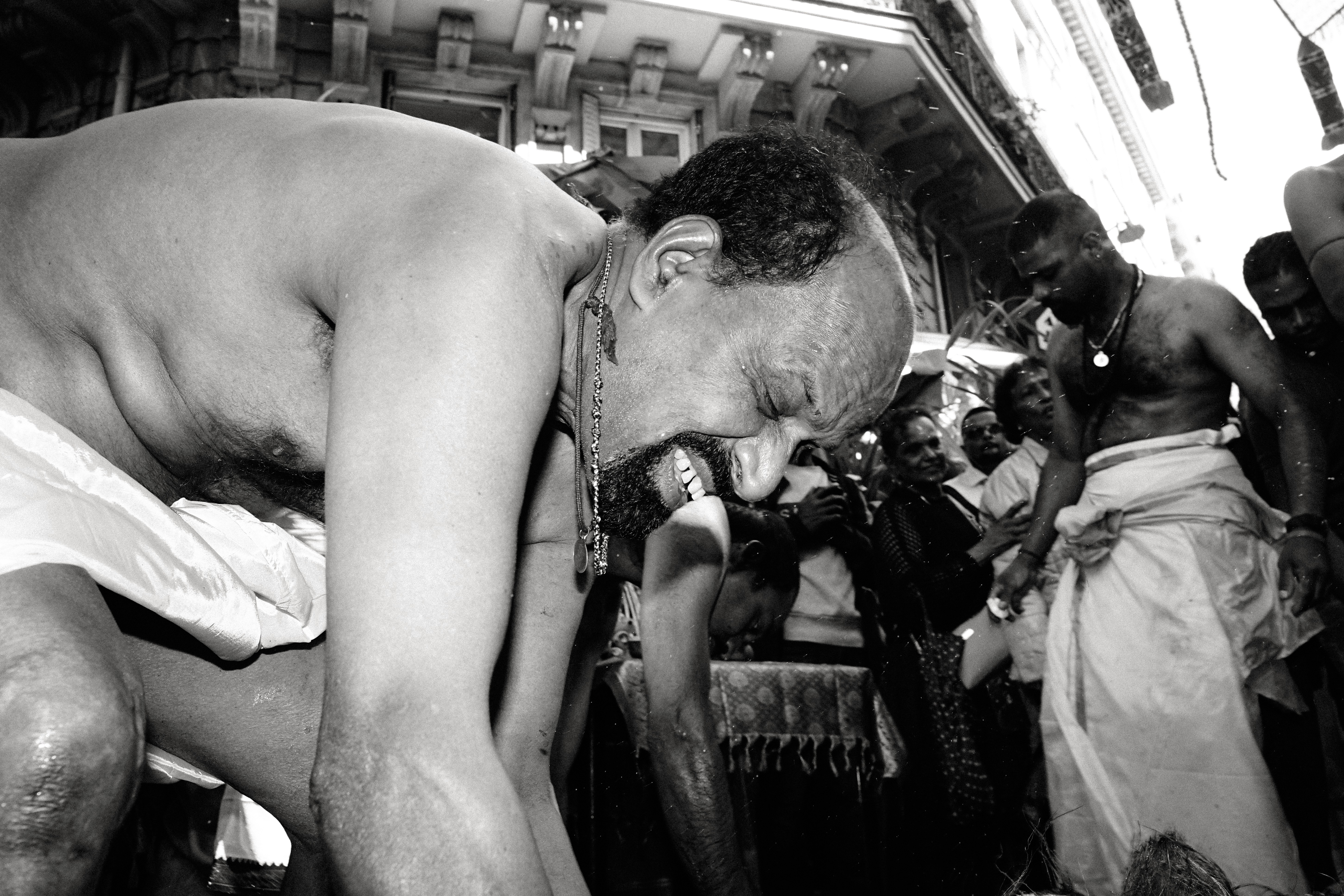
Yet with a 28mm sweep, Axel Pimont takes a deliberate counter-step. In his Fête de Ganesh series, he renders the festival’s chromatic rapture in crisp black and white—not as reduction, but as refraction. Shedding flowers of their guise and idols of their painted veneer, he conjures exaltation in beads and grain: faces ignited, spirits alight, rivulets of sweat mingling with coconut water. Pushing into the density of the syncopated crowd, he apprehends the inner exhilaration of his subjects wrested from the collective surge. “Famed for its chromatic profusion, the festival stripped to black and white allows me to distill what moves me most: gazes, faces, corporeality, and pulse.”

Haptic and cinematically transposed, Pimont’s lens holds in monochrome what is destined to vanish: altars built to be dismantled, a deity borne toward the waters by his devotees. As Ganesh is once again surrendered to the river’s current, dissipating into ripple and flow, receding into the impermanence that defines all things, Pimont’s photographs stage a paradox—rendering tangible the sanctity of the fleeting and the fortuitous.
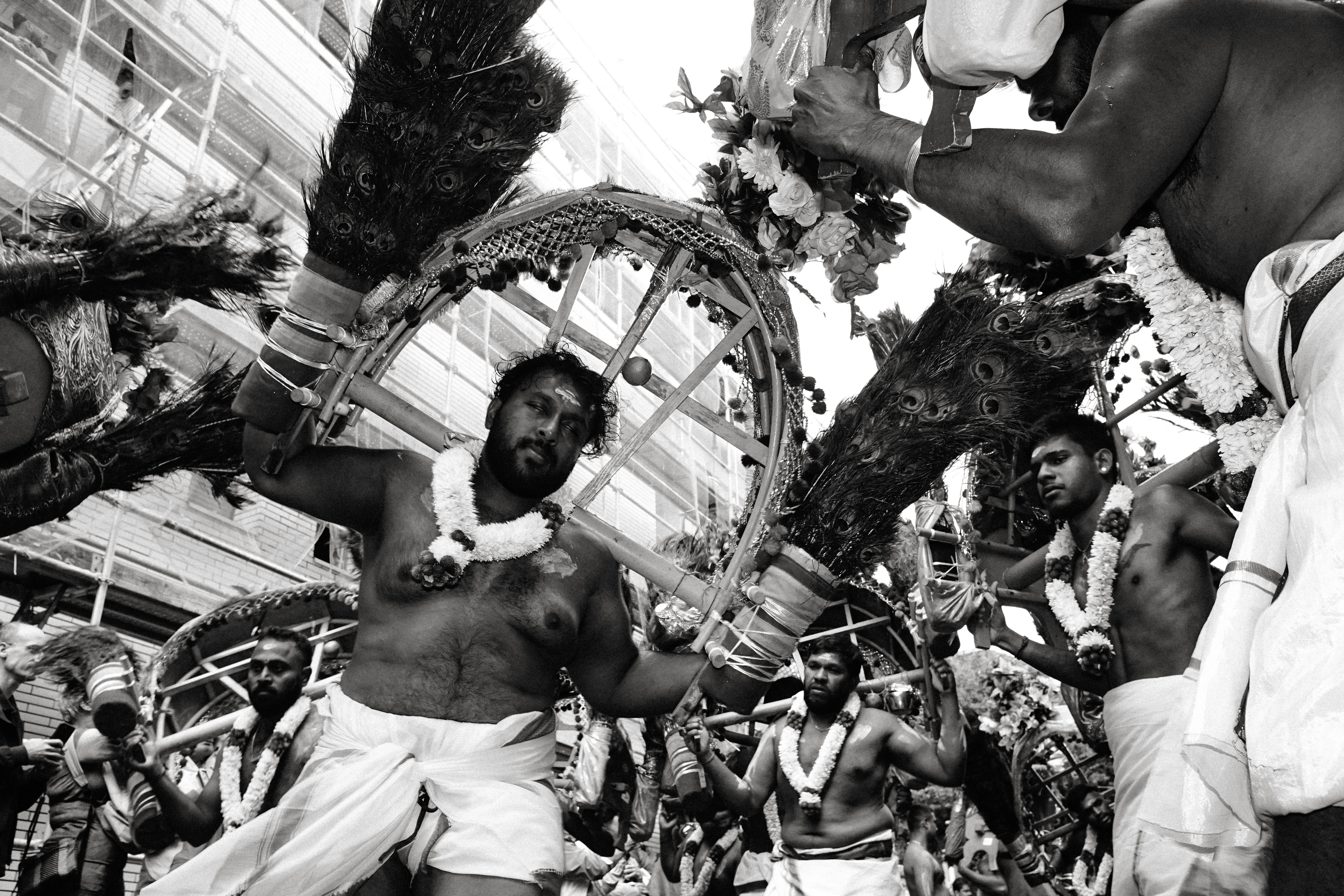
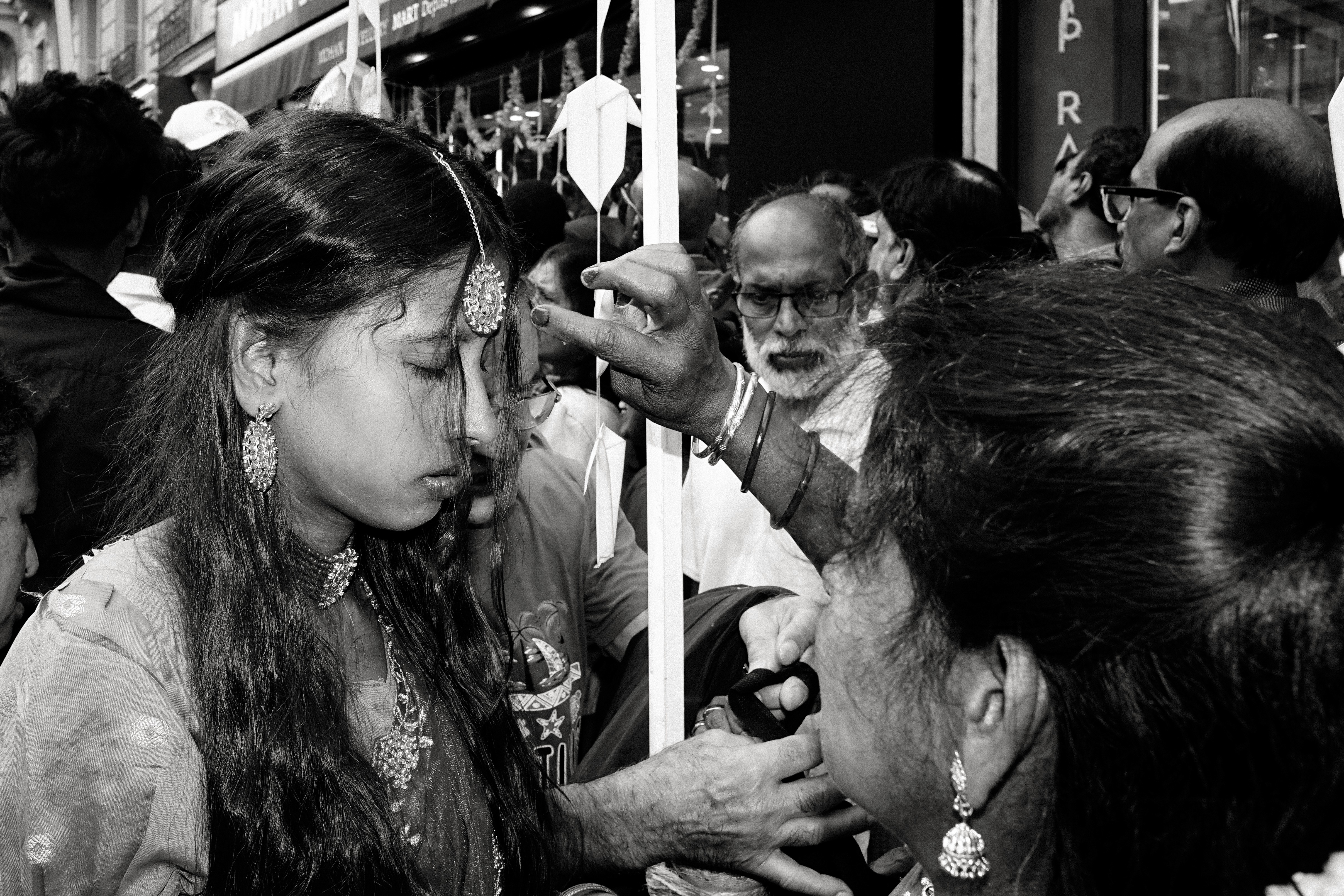
Yet with a 28mm sweep, Axel Pimont takes a deliberate counter-step. In his Fête de Ganesh series, he renders the festival’s chromatic rapture in crisp black and white—not as reduction, but as refraction. Shedding flowers of their guise and idols of their painted veneer, he conjures exaltation in beads and grain: faces ignited, spirits alight, rivulets of sweat mingling with coconut water. Pushing into the density of the syncopated crowd, he apprehends the inner exhilaration of his subjects wrested from the collective surge. “Famed for its chromatic profusion, the festival stripped to black and white allows me to distill what moves me most: gazes, faces, corporeality, and pulse.”

Haptic and cinematically transposed, Pimont’s lens holds in monochrome what is destined to vanish: altars built to be dismantled, a deity borne toward the waters by his devotees. As Ganesh is once again surrendered to the river’s current, dissipating into ripple and flow, receding into the impermanence that defines all things, Pimont’s photographs stage a paradox—rendering tangible the sanctity of the fleeting and the fortuitous.