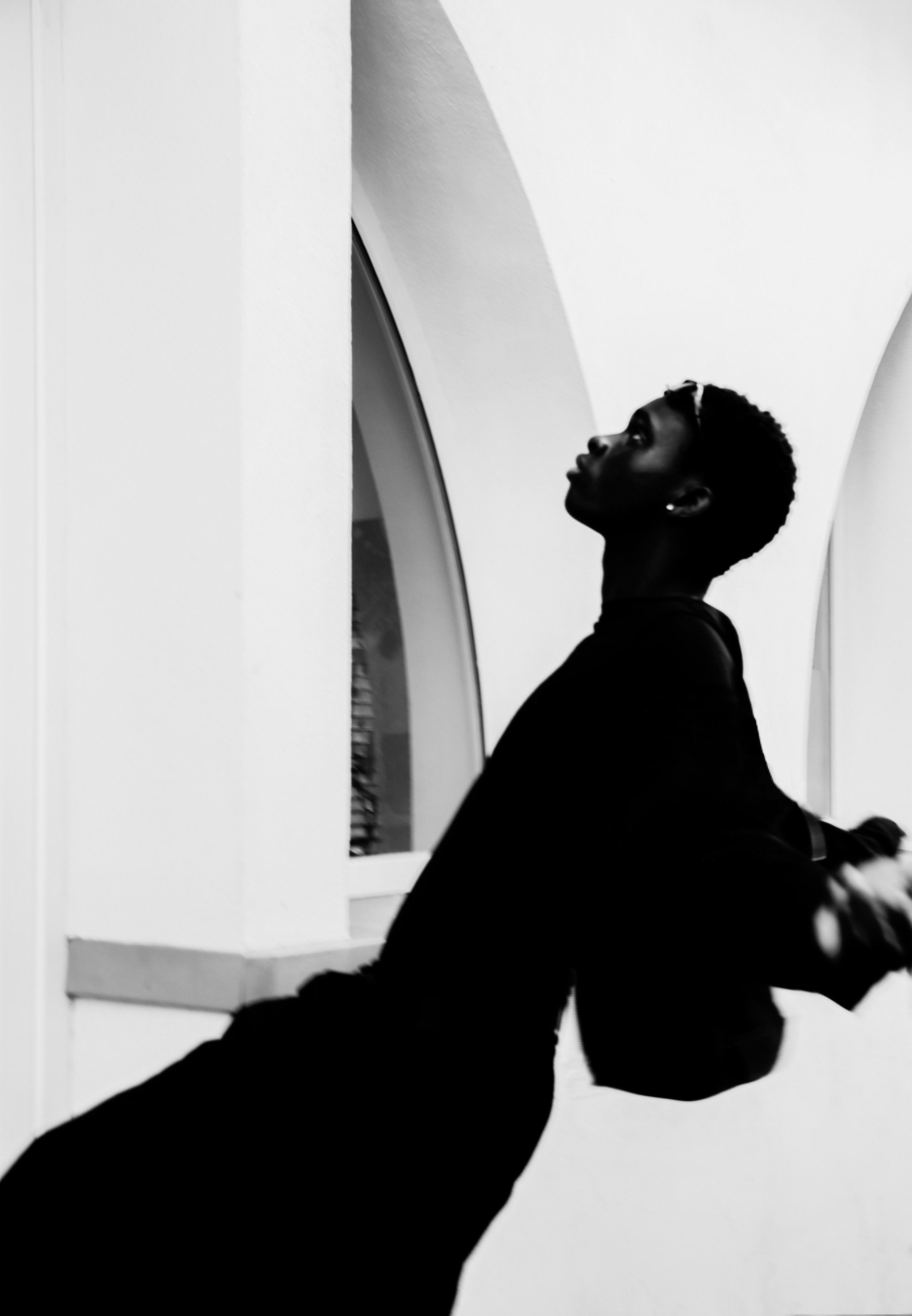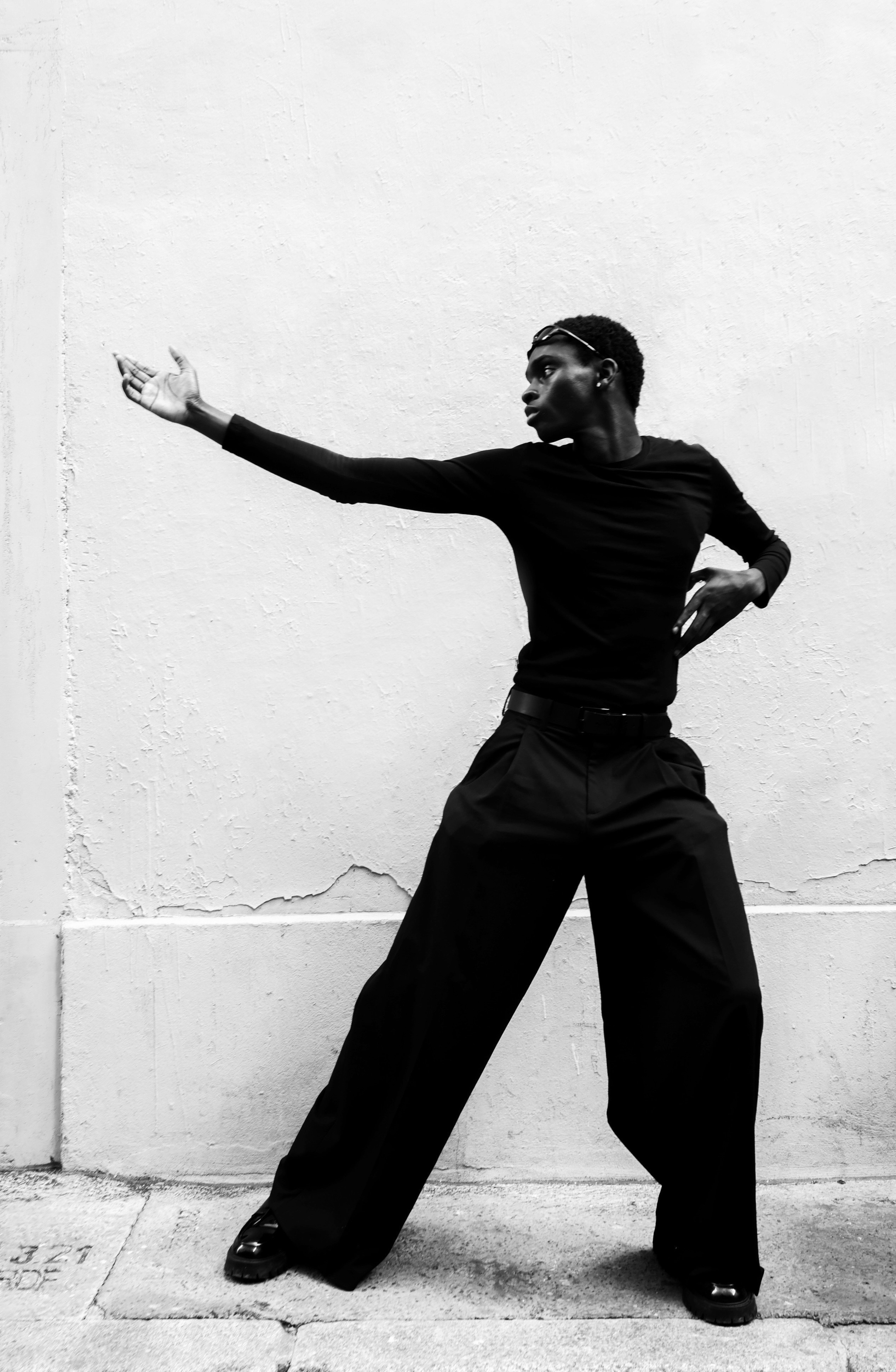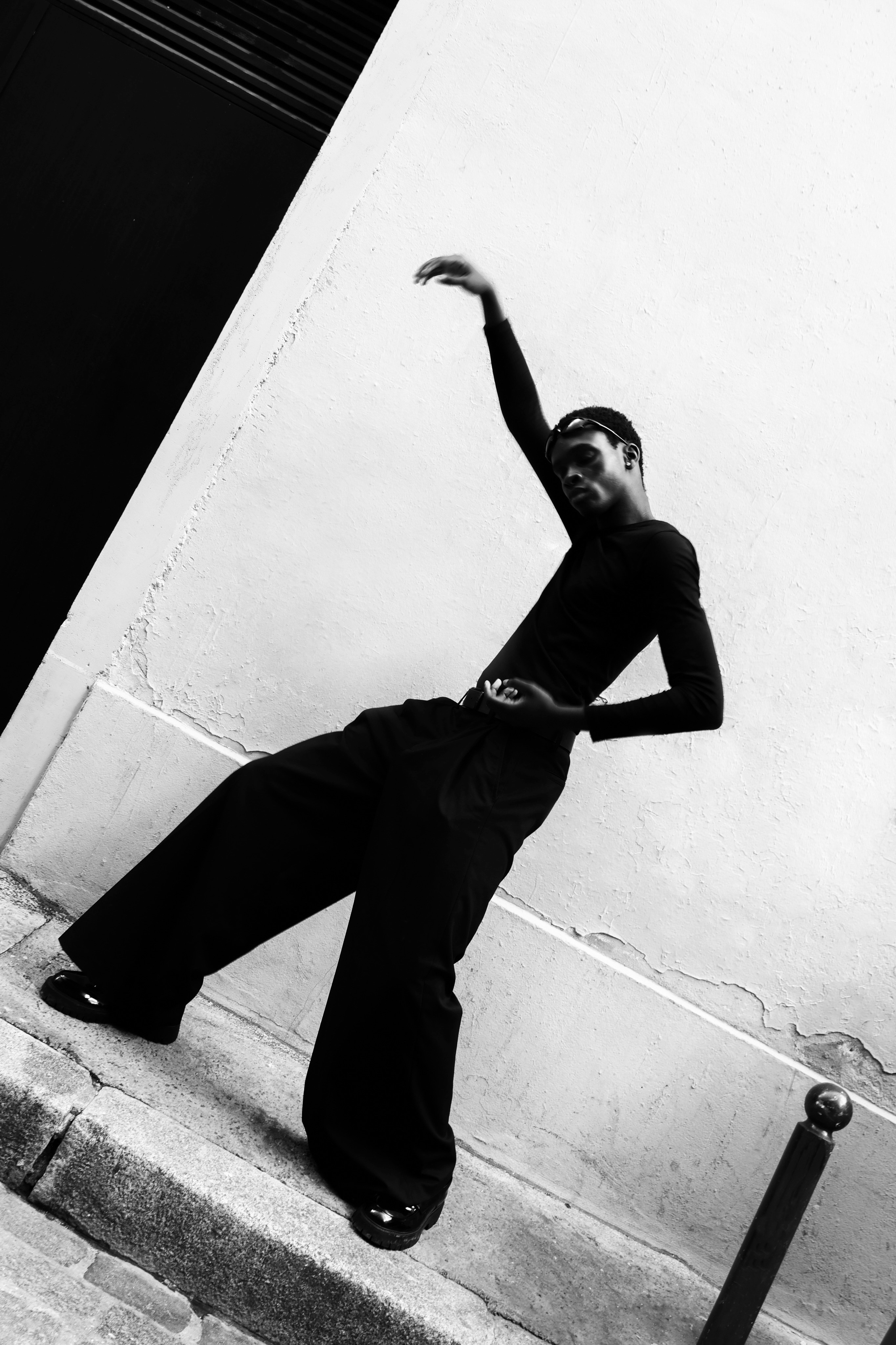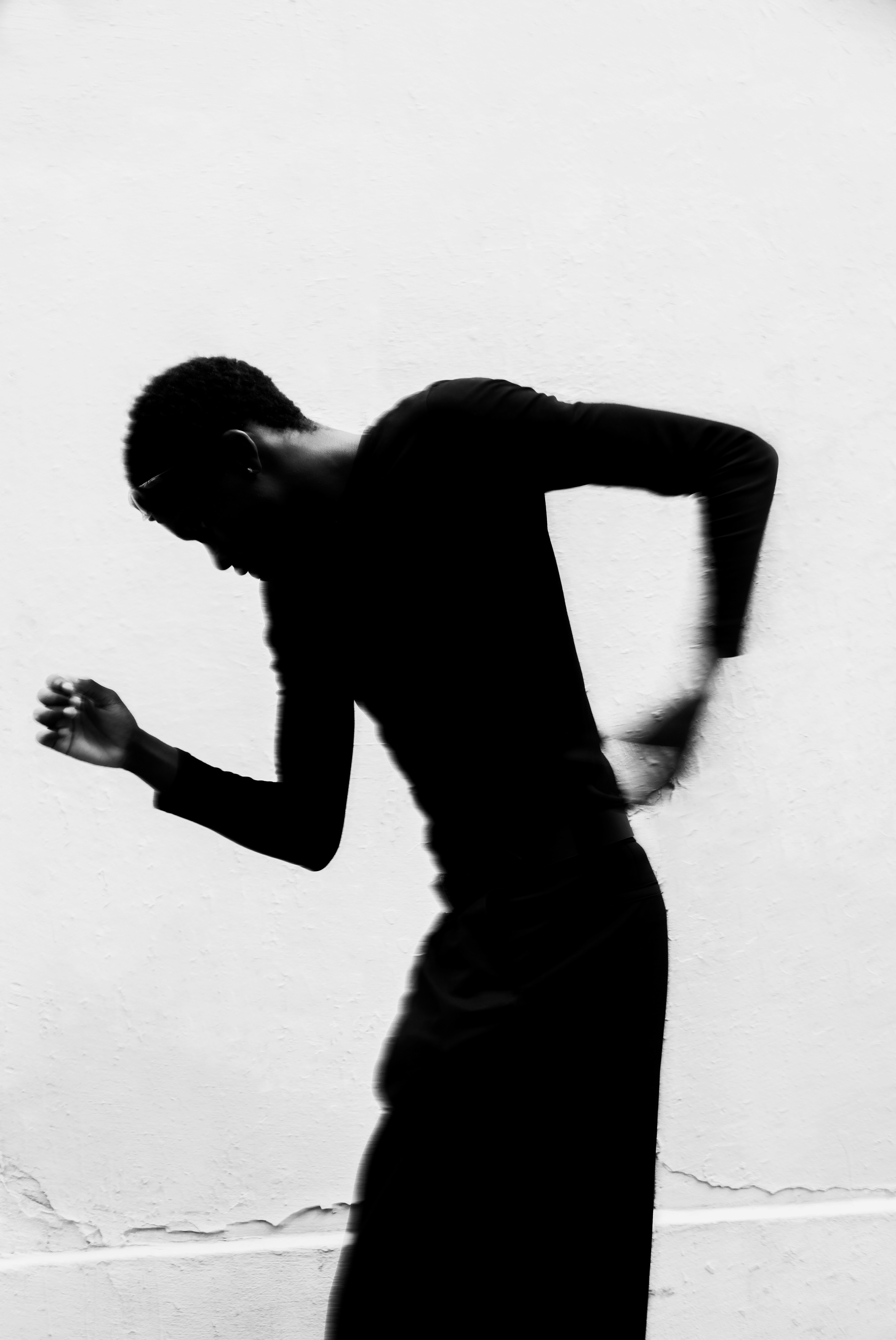
In What Comes Before the Fall, Ingrid Saint Honoré trains her lens on what precedes denouement: the taut instant when gravity has declared its intentions but has yet to make good on them. She denies us the release of impact, insisting instead that we inhabit this interval alongside her subjects. It’s a fraught proposition, this dwelling in perpetual brink — a memento mori rendered through indefinite postponement rather than explicit catharsis.
The tension between control and surrender becomes the work's structural principle. Saint Honoré’s subjects aren’t falling or standing but exist in an oblique space where both states coexist, where the body has not yet decided whether to resist or yield. It’s less about the physics of freefall than its psychic weight — how anticipation becomes its own condition.